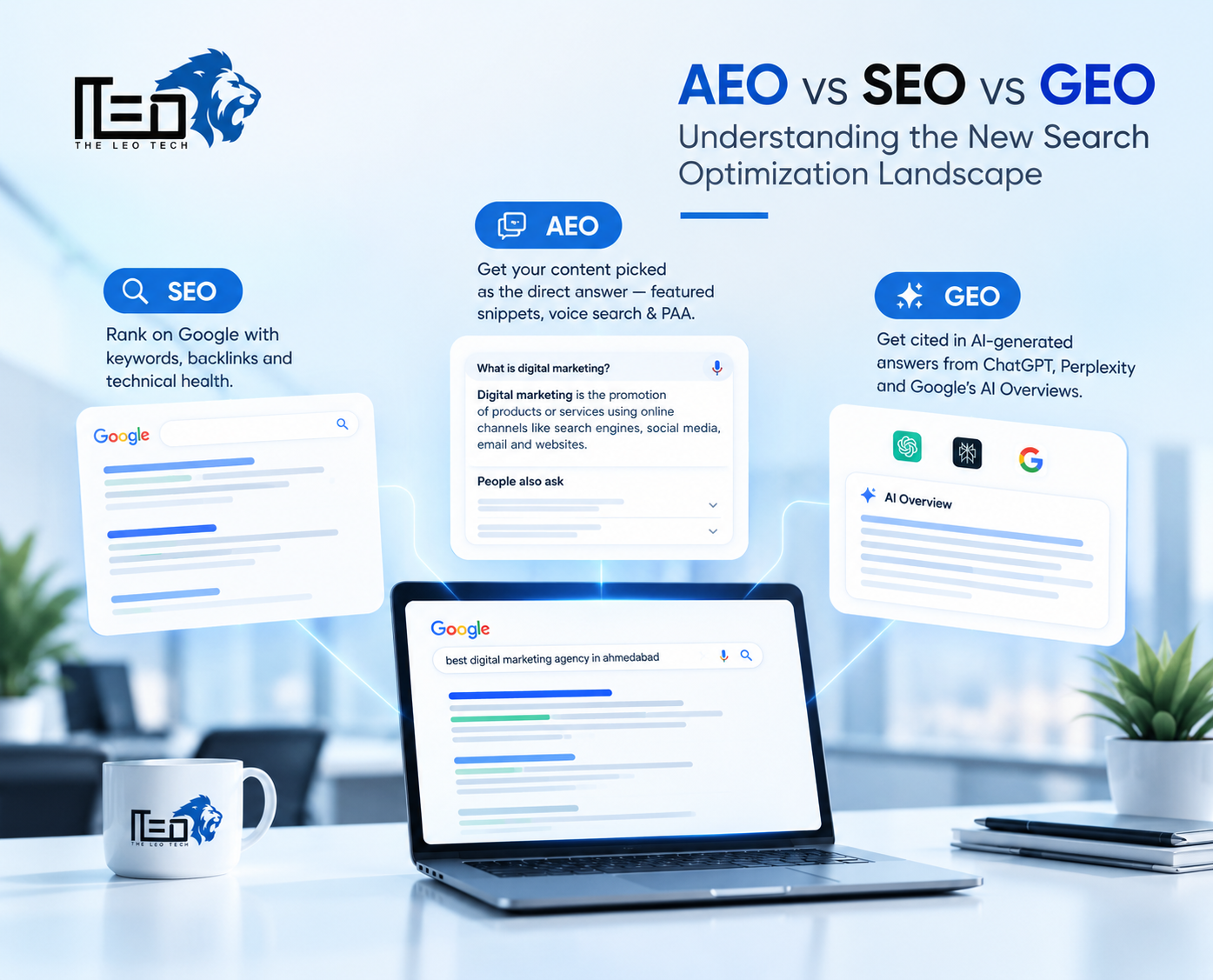
Search is splitting into three distinct games, and businesses that only play one are already falling behind.
SEO is still the foundation — ranking your website on Google through keywords, backlinks, and technical health. It gets people to click through and browse.
AEO (Answer Engine Optimization) is newer. It’s about getting your content picked as the direct answer — think featured snippets, voice search results, and “People Also Ask” boxes. AEO rewards clear, structured answers over long-winded pages.
GEO (Generative Engine Optimization) is the real shift. Tools like ChatGPT, Perplexity, and Google’s AI Overviews don’t send traffic to ten blue links — they generate one answer, often pulling from a handful of trusted sources. If your brand isn’t cited there, you’re invisible to a growing share of searchers who never scroll past the AI summary.
Why this matters right now:
- More searches now end without a single click to any website — the answer satisfies the user on the spot.
- AI engines favor content that’s well-structured, fact-based, and easy to extract — bullet points, clear definitions, and direct answers outperform vague storytelling.
- Brands appearing in AI citations build authority even when the user doesn’t click through, shaping decisions before a website visit ever happens.
Industry SEOs increasingly agree: the winning strategy isn’t choosing one lane. Build SEO for discoverability, structure content for AEO’s answer boxes, and write with the clarity and authority that GEO’s AI models trust enough to cite.
The brands treating this as one connected strategy — not three separate checklists — are the ones showing up everywhere search happens now: in Google, in voice assistants, and inside AI-generated answers.
Not sure where your website stands in AI search results? Get a free AEO-GEO visibility audit from The Leo Tech and find out exactly what’s holding your brand back from being the answer AI engines choose.
