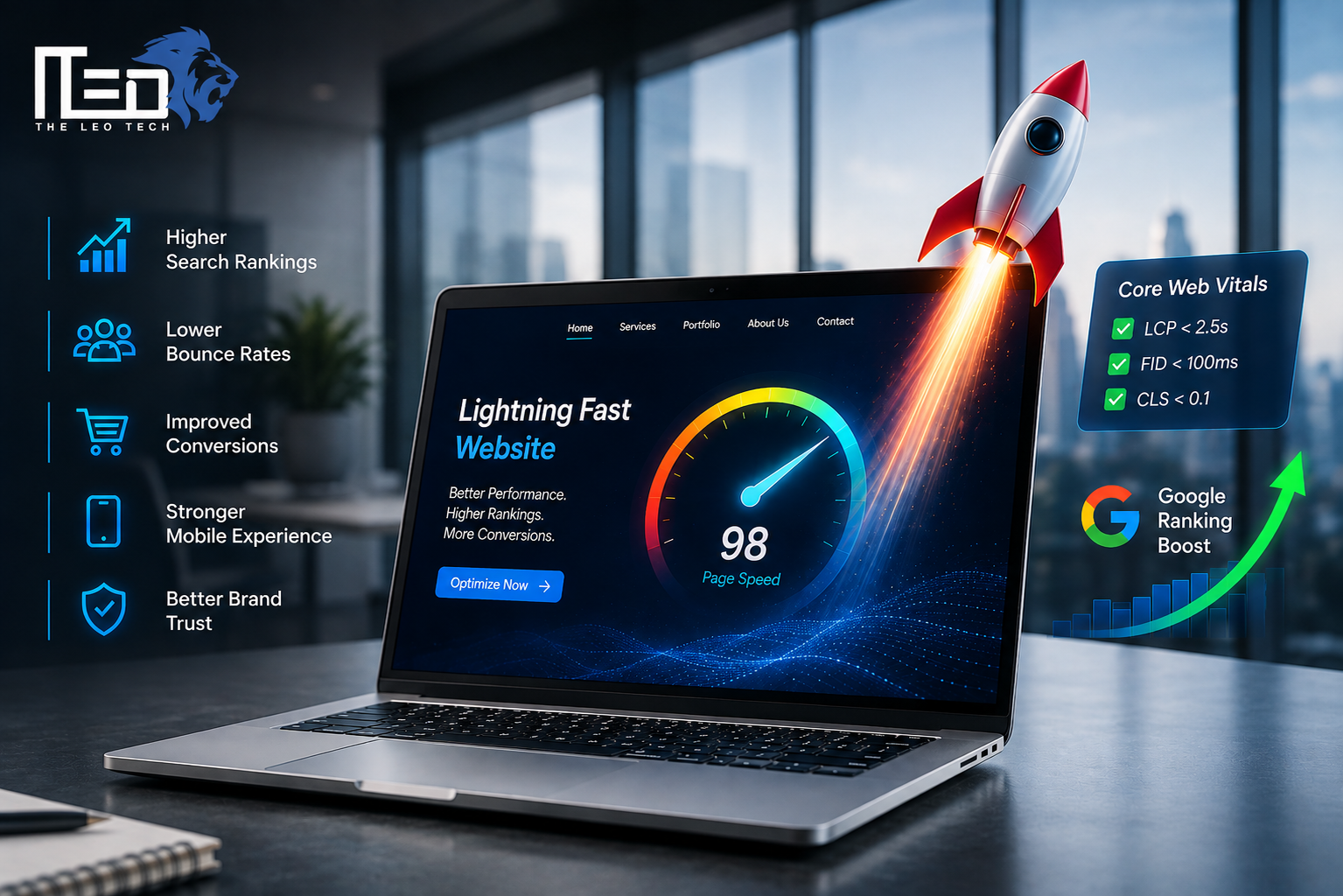
Website performance isn’t a technical afterthought anymore — it’s a ranking factor, a trust signal, and a revenue driver, all at once. Google’s Core Web Vitals directly influence SEO rankings, meaning a slow site can lose visibility no matter how good the content is. Users notice too: nearly half of visitors abandon a page that takes more than 3 seconds to load, and that lost visitor rarely comes back.
Here’s what a fast, optimized website actually delivers:
- Higher search rankings through better crawl efficiency and Core Web Vitals scores
- Lower bounce rates as users stay engaged instead of leaving frustrated
- Improved conversions since faster checkouts and forms mean fewer drop-offs
- Stronger mobile experience, critical as most traffic now comes from mobile devices
- Better brand trust, because speed signals professionalism and reliability
Industry experts increasingly treat page speed as a growth lever, not just an IT metric — it directly connects to customer retention and revenue. In 2026, businesses that invest in performance optimization aren’t just improving SEO; they’re protecting every rupee spent on marketing.
Want a website that ranks faster, loads faster, and converts better? Talk to The Leo Tech team today and let’s build a site that works as hard as you do.
